LOW EMPLOYEE RETENTION?: 4 CAUSES & 9 SOLUTIONS
LOW EMPLOYEE RETENTION?: 4 CAUSES & 9 SOLUTIONS
In a highly competitive job market, businesses need to understand the factors behind employee retention now more than ever. Minimizing turnover is not only crucial for the bottom line but also to build a culture that fuels future growth. In this blog, veteran HR consultant Athina Iliadis shares tips from our upcoming Employee Retention webinar including:
- Why employee retention is so important
- 4 top causes of high employee turnover
- 9 steps to reduce it: 5 proven & 4 non-traditional
Want an invite to the webinar? Click here.
Why is employee retention so important?
Besides financial implications, high turnover adversely affects the remaining staff and the business's clientele. As coworkers witness their peers departing, their workloads frequently surge, initiating a cycle of increased departures and heightened stress.
Feeling frustrated and overburdened, employees are less inclined to deliver optimal performance, resulting in a decline in the company's product or service quality. On the other hand, elevated employee retention typically signifies a positive workplace culture and plays a direct role in the overall success and effectiveness of the business.
What are the causes of staff turnover?
We’ve looked at countless studies and compared to our 25 years in HR for all types of companies. Here’s are the top causes of turnover:
- Manager conflict: 44% of employees feel that managers don’t differentiate recognition accurately.
- Inadequate compensation: A study from Paychex revealed that 70% of respondents would leave a job because of low pay.
- Personal circumstances change: There are several reasons for leaving a job that has nothing to do with the employer, such as relocating for a spouse, family issues, a career change or health reasons.
- Lack of opportunity: Employees who see a lack of workplace development, career path or opportunity to gain new experiences may leave for a business with better mobility.
- Incompatibility: Incompatibilities between employer and employee, which can often be traced back to poor hiring processes and decisions, are a common and largely avoidable reason for turnover.

How do you fix low employee retention?
Companies often prioritize compensation to retain key talent, but research emphasizes the importance of tailored strategies that integrate development and communication. Here are 4 traditional but proven ways:
1. Key training (internal/external)
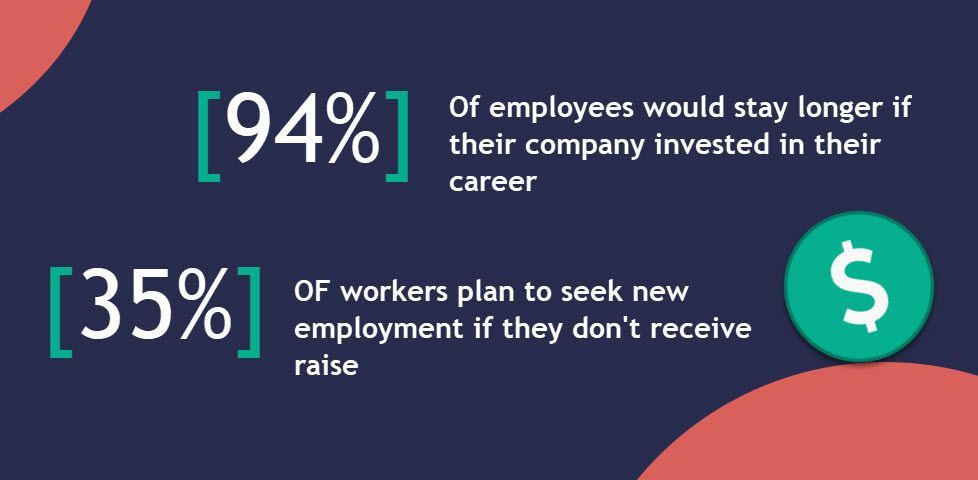
According to LinkedIn, 94% of employees would stay longer if their company invested in career development. The lack of such opportunities is linked to increased intentions of voluntary turnover, highlighting the importance of clear career paths and employee development investment to retain staff.
2. Above-market pay increases
35% of workers plan to seek new employment if they don't receive a raise. Ensure you are providing fair or better wages, competitive salaries, and benefits. Otherwise, can you really fault them for considering other opportunities?
(Need help benchmarking your compensation vs the market or creating a full employee rewards ‘statement’? AugmentHR’s compensation experts can help. Learn more about our compensation services.)
3. Promotion
To minimize employee turnover, it's crucial to demonstrate appreciation and value. This can be achieved through genuine, real-time recognition of employees' accomplishments and hard work.
4. Behavioural assessments
These tools, including the Myers-Briggs Type Indicator (MBTI), DiSC, Hogan360 Leadership Assessment, Upward Assessment, and Individual Satisfaction, uncover the "why" behind employee actions. This helps companies make informed decisions on recruitment, team building, leadership development and other growth-drivers.
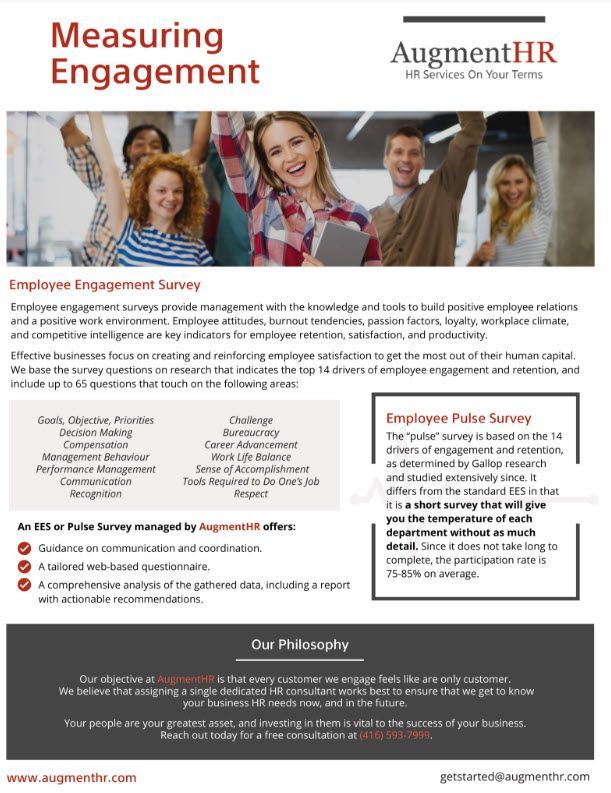
5. Take the pulse of your employee’s engagement
An employee engagement pulse check quickly assesses how satisfied employees are and their likelihood of staying with the company. It includes measuring signs of happy employees like:
- I understand what is expected of me at work.
- There is someone at work who supports my development.
- In the past year, I've had opportunities at work to learn and grow.
Need help measuring engagement?
Click here to download more about our Employee Engagement Surveys. Our ‘Pulse’ surveys are based on the 14 proven drives of engagement & retention.
…And 4 examples of non-traditional benefits you can offer your employees to reduce employee retention:
- Mental health perks. Show your employees you care about mental health by offering therapy sessions and mental health days.
- Family planning and childcare. Facilitate employees having a family by offering family planning assistance and a childcare stipend.
- Individual Training Budget. Each employee is allocated a lump sum (for example $1,000) to spend on training of their choosing.
- Company Cottage. A property that is shared amongst the employees throughout the year.
These are just some of the strategies to reduce employee turnover. Join our upcoming Employee Retention webinar for an in-depth look at additional strategies and insights into pulse questions. Don't miss out – reserve your spot now!

Athina Iliadis, an HR consultant at AugmentHR, brings extensive expertise in employee retention, performance management, coaching, talent acquisition, policy development, and HR best practices. As an AugmentHR consultant, Athina collaborates with clients to provide coaching and support for managers and employees on various HR issues. Her commitment, passion for assisting people, effective communication skills, and HR experience underscore her contributions to the field.
More HR solutions for Improving Employee Relations
8 Ways to Improve Employee Relations
4 Reasons Healthy Employee Relations Will Improve Company Morale