Everything You Need To Know About Leadership Training Programs (including getting them for less)
Everything You Need To Know About Leadership Training Programs (including getting them for less)
By Shelley Brown, CHRE, FHRPA,
HR Consultant, Executive Coach
I’ve spent over 30 years helping multinational organizations get the most out of their people and one thing I’ve learned is that as great as you might be as a company leader, you can only do so much as one person:
The single, greatest way you can impact your organization is through the leadership development of others.
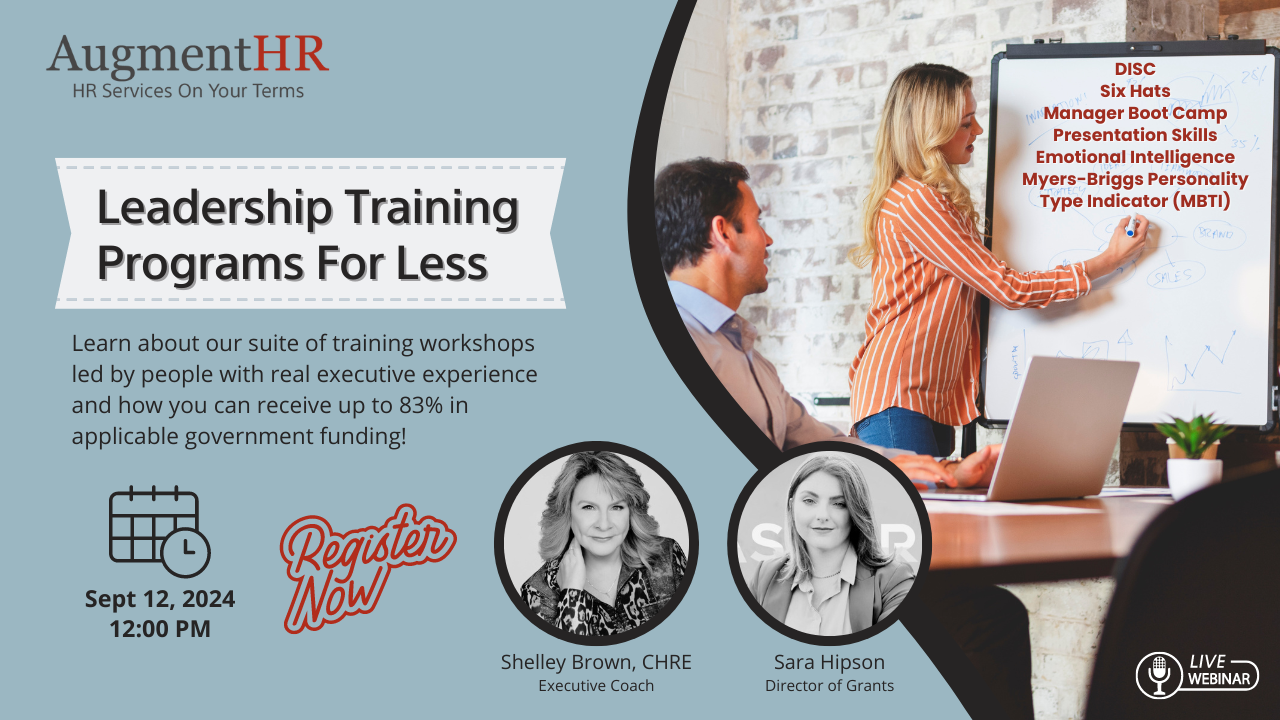
Strategic Funding Advisor Sara Hipson and I are hosting AugmentHR’s next webinar: Leadership Training Programs For Less. (See below for your invite.) It’s the latest in a series of webinars from the consultants at AugmentHR, a Toronto-based HR consulting firm.
In this blog post I’ll share some excerpts from that webinar including:
- What is leadership training and why is it important?
- What different training programs are available?
- What methods are the best to develop leaders?
- Are leadership training programs worth it? (How you can reduce costs up to 83%)
- What can you expect in a leadership training program?
What is leadership training? Why is leadership training important?
Workforce Leadership training is a more specialized program designed to develop & enhance leadership abilities throughout your organization. Don’t just confuse it with
workplace training (more on-the-job skill training including productivity and health & safety). Or
management training (more exclusively reserved for individuals in managerial roles).
Rather,
leadership training is the process of developing individuals to become effective leaders at every stage of your organization to create future leaders & enhance organizational performance.
Done right, investing in leadership training is a strategic move that yields significant benefits for both the individual
and the organization.
Benefits of Leadership Training for the Employee
- Skill Enhancement:
Training helps employees acquire new skills or improve existing ones, making them more valuable assets.
- Career Growth:
Opportunities for advancement and promotion often require additional qualifications.
- Increased Job Satisfaction:
Feeling valued and supported through training boosts morale and engagement.
- Personal Development:
Learning new things can be personally fulfilling and contribute to overall Well-being.
Benefits for the Employer
- Improved Performance:
A skilled workforce is more efficient and productive. Studies have indicated a 20% increase in overall job performance by leadership training participants.
- Increased Innovation:
Training fosters a culture of learning and creativity, leading to new ideas and solutions.
- Reduced Turnover:
Employees who feel valued and have opportunities to grow are more likely to stay with the company.
- Enhanced Reputation:
A commitment to employee development can improve the company's image as an employer of choice.
- Adaptability:
A trained workforce is better equipped to adapt to changes in technology, industry trends, and market conditions.
Overall, research has shown organizations that invest in leadership training can benefit from a 25% increase in the organizational outcomes they desire.
- What different training programs are available?
- What methods are the best to develop leaders?
What leadership training programs are available?
There’s thousands of types of workforce training programs available
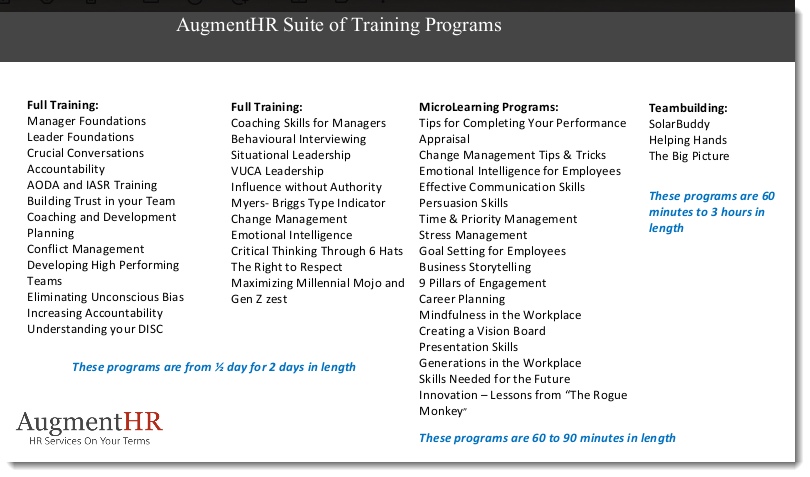
However, leadership training programs break down into four basic types:
1.Manager Foundations: Multi-day programs designed to give employees the essential skills to transition from an individual contributor to a respected manager capable of fostering team synergy and driving bottom-line results. Components might include:
- Understanding Yourself: e.g. Myer-Briggs Personality Type Indicators
- Understanding Others: e.g. Conflict Mode Instrument
- Performance Management: e.g. Objective Setting
2.
Leadership Foundations: The multi-day follow-up training program to the Manager training program, focuses on the skills needed to move from a great manager to a great leader within the organization. Components often include:
- Leadership begins with you: e.g. Leadership theory vs reality
- Team Leadership: e.g. Effective one one-on-one and team meetings
3.
Programs Designed To Improve Specific Leadership Skills: Shorter one to two-hour sessions or half-day workshops focused on fixing specific weaknesses within an organization. Examples might include:
- Performance Appraisals
- Goal Setting for Employees
- Time & Priority Management
- Presentation Skills
4. Team-Building:
One to 3 hour programs like Helping Hands or The Big Picture are effective ways to both enhance team morale and improve communication and desired outcomes.
For more detail on what happens in leadership training programs see our list of some of
our leadership and workforce training programs.

What training method is the best for leaders?
As you might have guessed from the above, the leadership training programs that are the most effective for your employees and give you the greatest return on investment are customized to your organization’s goals, weaknesses and the diverse needs of the attendees.
Be wary of ‘cookie cutter’ leadership program companies that spend more time selling you on their ‘proven’ yet inflexible programs and less time on listening to what you’re trying to achieve as an organization.
Are leadership training programs worth it? How much do they cost?
Leadership training programs can be expensive - figure $2000-$4500 days and more - but here’s the tip you need to know: you can receive government funding for up to 83% of your cost if you qualify and you know how to apply. We cover this in our upcoming
Leadership Training Programs For Less:
co-hosted by Grant expert, Sarah Hipson.
Are they worth it? They are if your desired outcome is clearly identified and the training is customized to your needs and conducted by seasoned professionals.
HR Consultant Shelley Brown has worked for many years as a senior executive in charge of HR in a variety of multinational companies in Toronto and Montreal. In her 30 years helping companies get the most out of their people, she gained valuable experience in coaching, learning & development. She then launched her own HR outsourcing company, growing it to over 25 HR consultants. She has been awarded the Human Resources Professional Association Fellow Award and was named one of Canada’s Distinctive Women.
She is a certified facilitator of the Myers-Briggs Personality Type Indicator for Individuals and Teams, the Thomas Killman Conflict Mode Indicator and the Hay/Korn Ferry 360 Leadership Assessment Tool
H2: More HR Solutions For Growing Companies
- 4 Tips for Improving Mental Health in the Workplace in 2024
- 5 Strategies For Improving Employee Relations
- An Employer’s Guide to Employee Outplacement Services