Tariffs Are Putting Pressure on Canadian Employers: 7 Options to Consider Before Layoffs
Tariffs Are Putting Pressure on Canadian Employers: 7 Options to Consider Before Layoffs
Tariffs, changing demand and rising business costs can put pressure on Canadian employers to reduce payroll. But layoffs are only one possible response.
Before reducing headcount, employers should understand:
- How significant the business decline is
- Whether the change is temporary or structural
- What payroll reduction is actually required
- Which skills and roles the business will still need
- Whether employees can be redeployed, retrained or retained through temporary measures
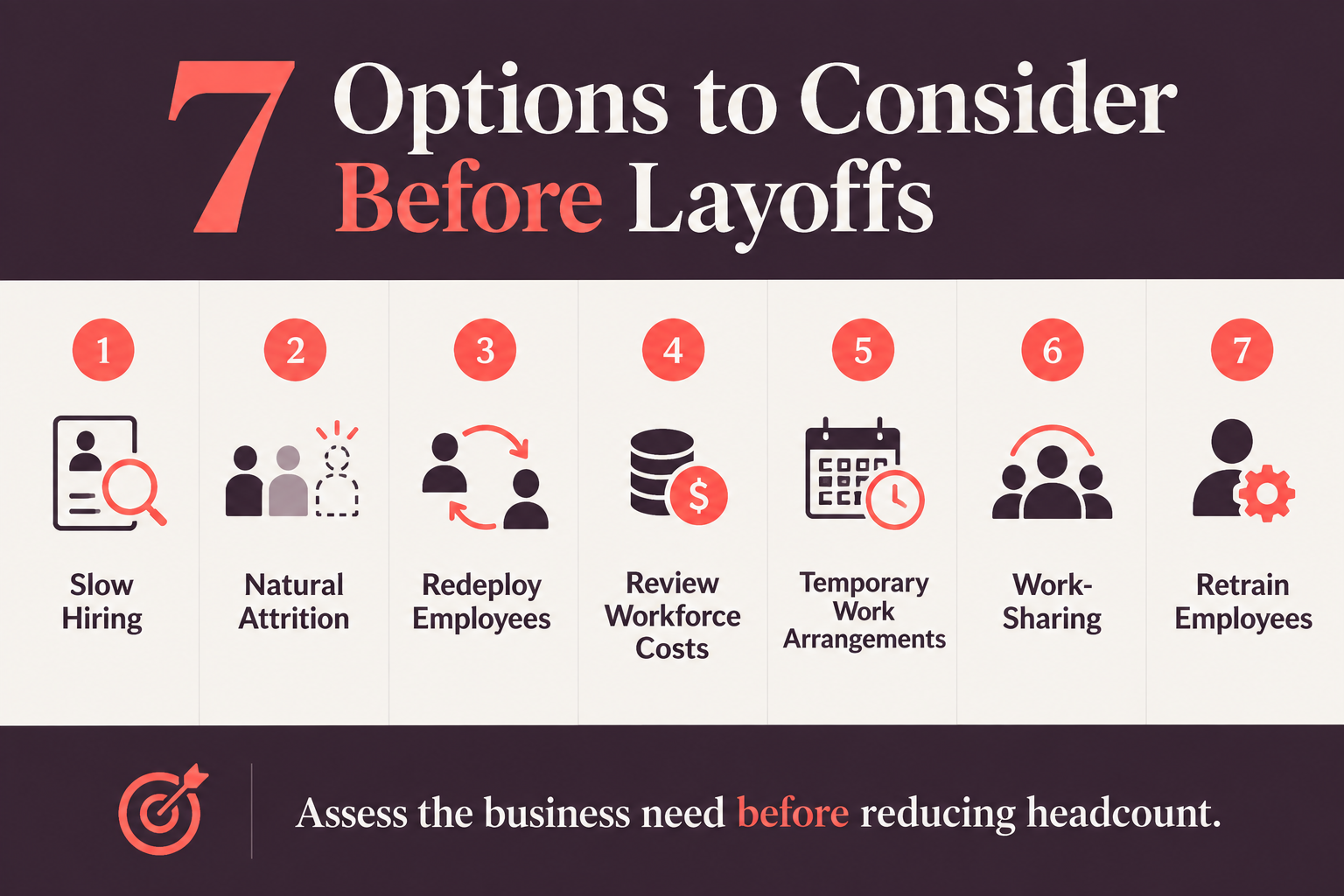
Seven options worth considering include hiring controls, natural attrition, redeployment, workforce cost reviews, temporary work arrangements, Work-Sharing and retraining.
If workforce reductions are ultimately necessary, AugmentHR recommends defining the organization’s future business needs first and then making headcount decisions against that structure.
Tariffs, higher input costs, supply chain disruption and changing customer demand can quickly affect business forecasts.
When revenue or orders decline, payroll is often one of the first major expenses leadership reviews. But moving directly from cost reduction to layoffs can create new problems, including the loss of critical knowledge, heavier workloads for remaining employees and the need to rehire skills later.
Current labour market conditions also affect industries differently. That means employers need to assess their own business outlook rather than apply a standard workforce reduction across the organization.
AugmentHR Insight:
“A 15% payroll reduction does not necessarily mean reducing 15% of the workforce. The objective is to determine what organizational structure the business can sustainably operate with and then make headcount decisions based on that structure, rather than starting with a percentage and working backwards to a list of names.”
Start With the Business Need Before the Headcount
When a client tells AugmentHR that revenue or orders have dropped and layoffs may be necessary, the team begins by understanding three things:
How significant is the decline and how long is it expected to last?
What payroll reduction does the business actually need to achieve?
Where does the business still need capacity to operate effectively and support future growth?
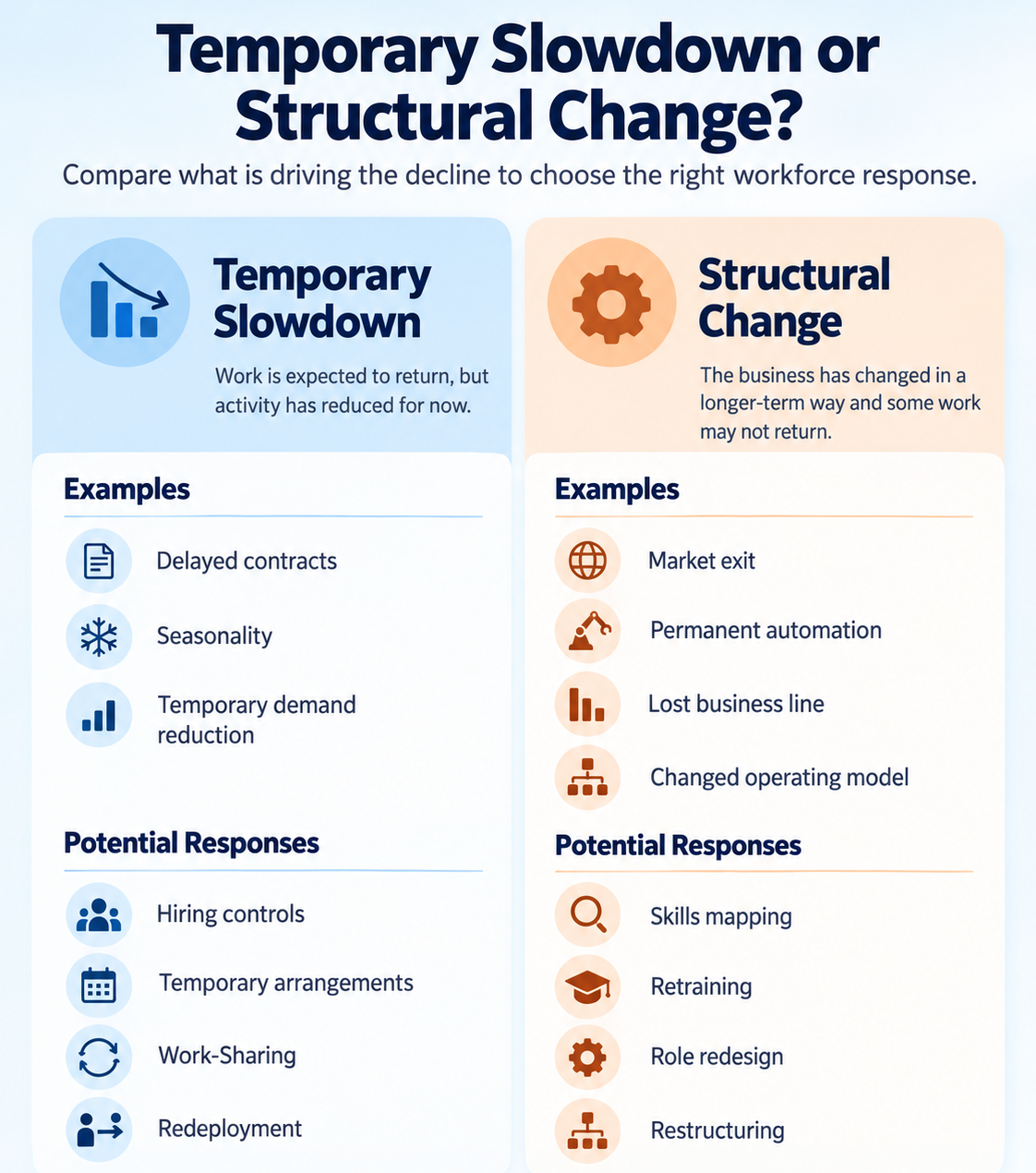
These questions help determine whether the organization is dealing with a temporary slowdown or a more permanent change.
A delayed contract, seasonal slowdown or temporary decline in demand may reverse. A lost revenue stream, market exit, automation or changed operating model may mean certain work will not return.
Employers should also consider which skills and capabilities will still be needed six or twelve months from now.
1. Slow Hiring and Review Every Vacancy
Reducing future hiring can be one of the least disruptive ways to control payroll.
Rather than applying a blanket hiring freeze, review each open or proposed role individually.
Review:
- Whether the position directly supports revenue, customers, compliance or critical operations
- Whether another employee or team currently has available capacity
- Whether all of the previous responsibilities still need to exist
- Whether technology has reduced part of the workload
- Whether the position should be redesigned before being filled
A vacancy can be an opportunity to reassess how work is structured instead of automatically replacing the previous employee.
2. Use Natural Attrition Strategically
Resignations and retirements can also provide opportunities to gradually adjust workforce costs.
When an employee leaves, review the work attached to the role before automatically replacing the position.
Identify which responsibilities remain essential, which can be redistributed, and which may have become outdated, duplicated or automated.
The key is to avoid simply transferring an entire workload to the remaining team. Leadership should confirm that responsibilities can be absorbed without creating burnout, service issues or operational risk.
3. Redeploy Employees Into Work the Business Still Needs
A position becoming unnecessary does not always mean the employee’s skills are no longer valuable.
Through an
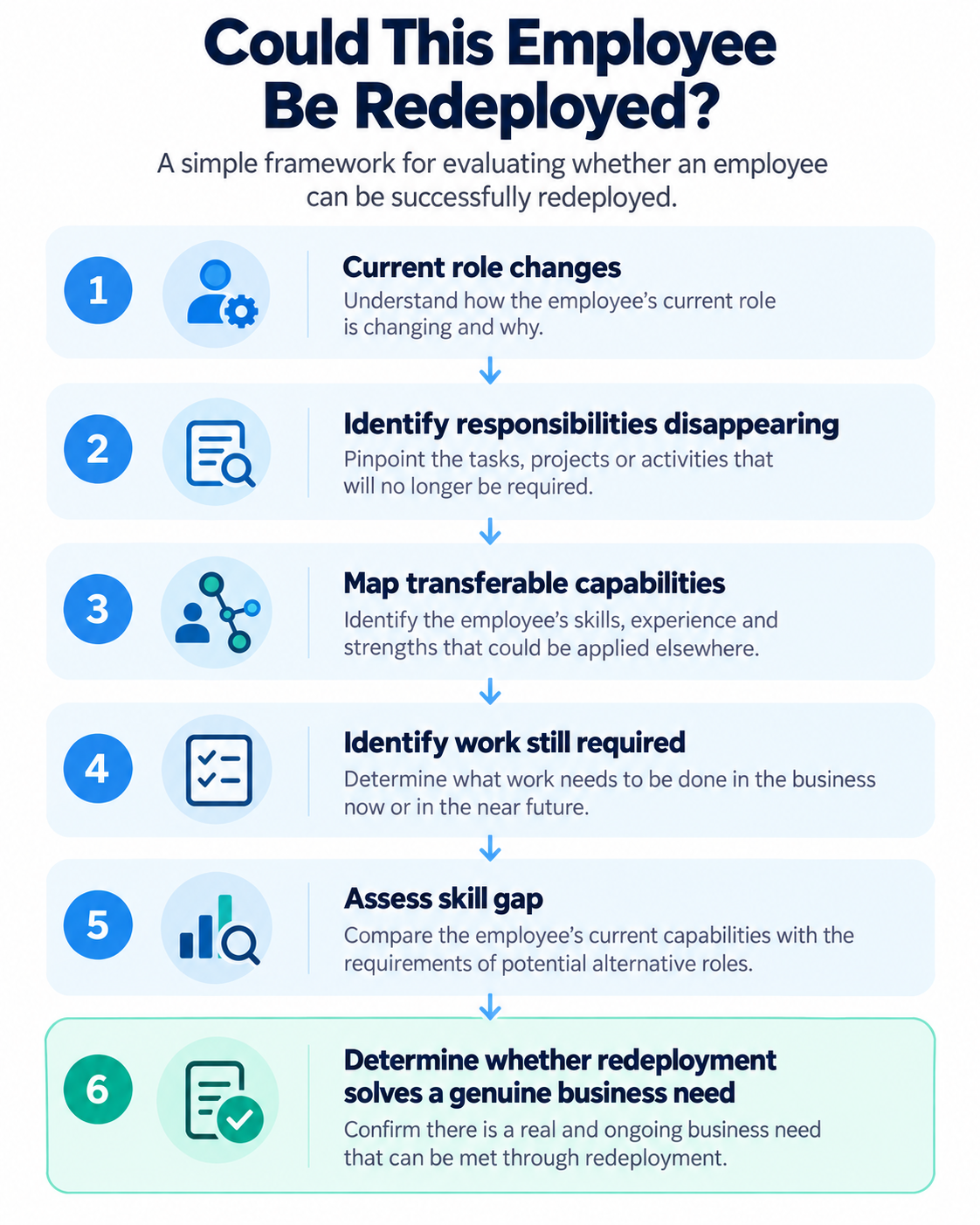
HR and People Audit, AugmentHR can assess the work being performed across the organization and compare employee skills, experience, performance and capacity with work that still needs to be done.
Useful capabilities may include:
- Industry knowledge
- Client relationships
- Technical expertise
- Leadership ability
- Process knowledge
- Transferable skills
A Real AugmentHR Example
AugmentHR worked with an organization where automation reduced the amount of work required in one employee's original position.
Rather than evaluating the employee only against the old job description, the organization assessed that person's transferable skills alongside responsibilities required by other teams.
The role was redesigned. The work that could be automated remained streamlined, while the employee moved toward responsibilities where their experience created more value.
What made the decision successful was that there was a legitimate organizational requirement.
AugmentHR Insight:
“The organization was not creating a position just to retain an employee. It was matching existing talent to work the business needed performed. This helped maintain employee satisfaction while ensuring employees were focused on areas where their skills and experience added the most value.”
4. Review Overtime, Contractors and Temporary Labour Costs
Permanent employees are only one part of total workforce spending.
Before eliminating core roles, employers should understand how much they are spending across:
- Overtime
- Temporary employees
- Staffing agencies
- Contractors
- Consultants
- Seasonal labour
- Vacant positions scheduled to be filled
This can reveal workforce design problems that are less visible on an organizational chart.
For example, one team may be paying significant overtime while another has unused capacity, or external resources added during a growth period may no longer be required.
The goal is to understand the full workforce cost before making headcount decisions.
5. Consider Voluntary Temporary Work Arrangements
When demand is expected to recover, temporary workforce measures may help an organization reduce short term costs while retaining experienced employees.
Possible options can include:
- Voluntary reduced schedules
- Temporary leaves
- Job sharing
- Other mutually agreed arrangements
Changes to hours, compensation or other employment terms can have legal implications. Employers should review employment agreements, applicable employment standards and collective agreements where relevant, and seek legal advice before making material changes.
6. Explore Work-Sharing and Current Government Support
Canada's federal Work-Sharing Program may help eligible employers experiencing a temporary reduction in normal business activity avoid layoffs.
Participating employees temporarily reduce their working hours while eligible employees receive Employment Insurance benefits for the time not worked.
Tariff-related Work Sharing special measures have been extended until March 31, 2028.
For AugmentHR, the important question is whether the decline in work is truly temporary.
AugmentHR Insight:
“Work-Sharing can be appropriate when a business is experiencing a temporary reduction in activity but expects that work to recover and wants to retain employees in the meantime. If a function has permanently disappeared, a business unit is closing or technology has eliminated the need for certain work, reducing hours temporarily does not address the underlying workforce issue.”
Employers should confirm current eligibility, application requirements and program details directly with Service Canada before relying on Work-Sharing or other workforce-support programs.
7. Retrain Employees for Changing Business Needs
Economic pressure can change the type of work an organization needs, not just the amount of work.
For example, a company may need different supply chain capabilities, stronger technical skills or employees who can support new markets.
Before eliminating a role, employers can assess whether an existing employee has a realistic path into work expected to remain or grow.
Consider:
- Transferable skills
- Performance history
- Ability and interest in learning
- Size of the skill gap
- Training time and cost
- Future demand for the new capability
- External recruitment cost if the skill is needed later
Retraining will not always make sense, but it is worth evaluating before losing employees whose skills may still be valuable.
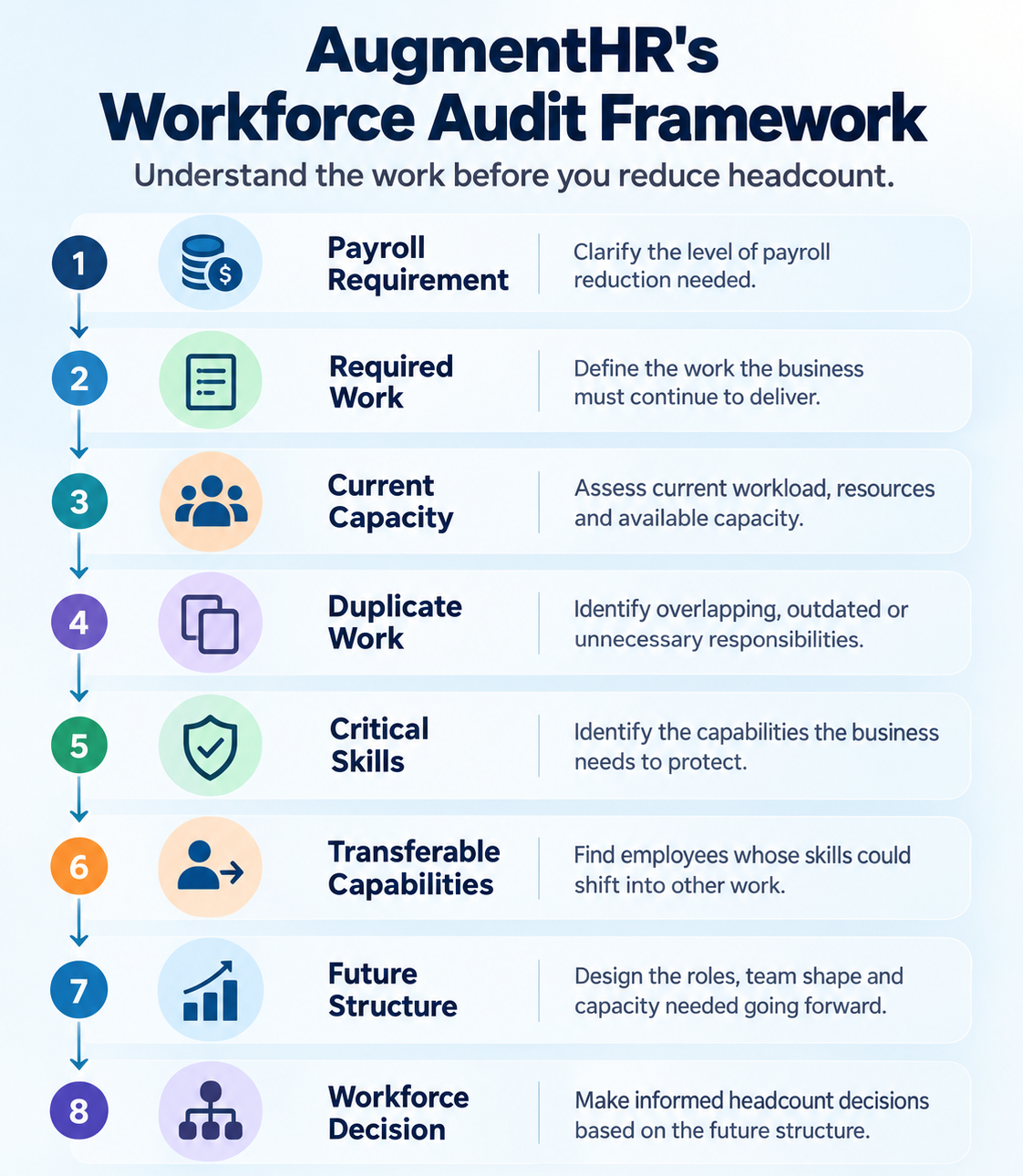
If Workforce Reductions Are Still Necessary, Design the Future Organization First
Not every workforce reduction can be avoided.
If certain work has permanently disappeared or the existing structure is no longer financially sustainable, restructuring may be necessary.
AugmentHR recommends defining the future organization before deciding which positions will be affected.
Leadership should understand:
- What work will remain
- Which capabilities are critical
- Where duplication exists
- What responsibilities can be redistributed
- What the future structure should look like
Headcount decisions can then be made against that model.
AugmentHR Insight:
“A rushed reduction can create additional problems. Critical knowledge can leave the business, remaining employees can become overloaded, responsibilities can become unclear and organizations can find themselves recruiting again shortly after eliminating positions.”
Employers should also review applicable legislation, contracts, human rights considerations, notice and severance requirements and other legal obligations before implementation.
Check out our Employee Termination Checklist for Canadian Employers for more detailed guidance on once termination planning begins.
Support the Employees Who Remain
A workforce reduction also affects the employees who stay.
They may be concerned about job security, workload and the company's stability.
AugmentHR recommends communicating clearly about why the change occurred, what priorities have changed and how responsibilities will be managed.
AugmentHR Insight:
“Poor communication after a workforce reduction can cause strong employees to begin looking elsewhere because they are concerned about their own roles.”
Workload should also be reassessed. If positions disappear but most of their responsibilities remain, the organization may have reduced payroll while creating a new retention or burnout problem.
Departing employees may also benefit from structured outplacement and career transition support.
Before Cutting Payroll, Audit the Work
If leadership needs a specific payroll reduction, AugmentHR recommends understanding the work before translating that percentage into people.
An HR and People Audit can identify:
- Excess capacity
- Overlapping responsibilities
- Work that no longer adds value
- Processes that can be automated
- Roles that have changed over time
- Employees whose skills may be better used elsewhere
- Teams that are already understaffed
A targeted employee pulse survey can also provide useful information about workload and capacity.
The goal is to define the workforce the organization can sustainably operate with and then align headcount to that structure.
How AugmentHR Can Support Workforce Planning and Restructuring
Workforce uncertainty can create several HR priorities at once.
Leadership may need to assess capacity, redesign roles, retain important skills, prepare managers and communicate change while continuing to manage normal HR responsibilities.
AugmentHR can support organizations with:
- HR and People Audits
- Workforce planning
- Role and responsibility mapping
- Redeployment planning
- Employee relations
- Manager coaching
- HR compliance
- Training and development
- Outplacement support
The goal is not to prevent every workforce reduction.
It is to help employers make informed decisions about the structure, skills and people the business will need next.
Facing Workforce Pressure? Talk to an AugmentHR HR Consultant
Frequently Asked Questions
Should employers document the business rationale behind workforce restructuring decisions?
Yes. Documentation can help show how business requirements, organizational changes and role decisions were evaluated. Employers should work with HR and qualified employment counsel to determine what records should be prepared and retained.
What should managers receive before they communicate a restructuring?
Managers should understand the approved message, changes to responsibilities, escalation contacts, common employee questions and available support. They should not be expected to interpret legal decisions or improvise information leadership has not confirmed.
How should employers handle employees who are on leave or receiving workplace accommodations?
Protected leaves, disability accommodations and human rights obligations can affect the restructuring process. Each situation should be reviewed individually with appropriate HR and legal guidance.
Can different employees receive different levels of outplacement support?
Potentially. Programs may differ based on factors such as role level, tenure or business circumstances, but the criteria should be deliberate and consistently applied. Employers should seek HR and legal advice where differential treatment may create risk.
How should confidential employee information be handled during workforce planning?
Access should be limited to people who genuinely need the information. Workforce planning documents should be securely stored and managed according to applicable privacy, information security and record retention requirements.