AI Readiness Starts with People, Not Technology
AI Readiness Starts with People, Not Technology
By Peter Zukow
Advisor & Managing Partner
The narrative surrounding Artificial Intelligence often focuses heavily on software capabilities. We hear about what the latest platforms can do, how fast they operate, and the administrative hours they promise to save.
However, technology does not create business value on its own. True AI readiness starts with human capital. As tools enter the workplace, organizations face people-centric challenges that software alone cannot solve.
What is AI Readiness?
AI readiness is the degree to which an organization is prepared to adopt and use artificial intelligence effectively, responsibly, and at scale through the right combination of strategy, people, technology, data, and governance.
AI Readiness in Human Resources
Adopting AI in HR isn't simply about giving recruiters access to ChatGPT or another generative AI platform. True AI readiness means having the people, processes, and policies in place to use these tools effectively, responsibly, and consistently.
An AI-ready HR team understands where artificial intelligence can add value, and where human expertise remains essential.
Recruiters and hiring managers should know how to write effective prompts, evaluate AI-generated content critically, and recognize when output needs to be fact-checked or rewritten. Just as importantly, organizations should establish clear guidelines around data privacy, confidentiality, and the appropriate use of AI when working with candidate information.
AI readiness also requires a shift in mindset. Rather than viewing AI as a replacement for recruiters, forward-thinking organizations use it to automate repetitive administrative tasks, improve the quality of recruitment materials, and free HR professionals to focus on higher-value activities such as building relationships with candidates, assessing cultural fit, and advising hiring managers.
Organizations that invest in AI literacy, governance, and ongoing training will be better positioned to improve hiring efficiency while maintaining a positive candidate experience. Ultimately, AI is most effective when it enhances human judgment, not when it replaces it.

The Reality of Shifted Workplace Dynamics
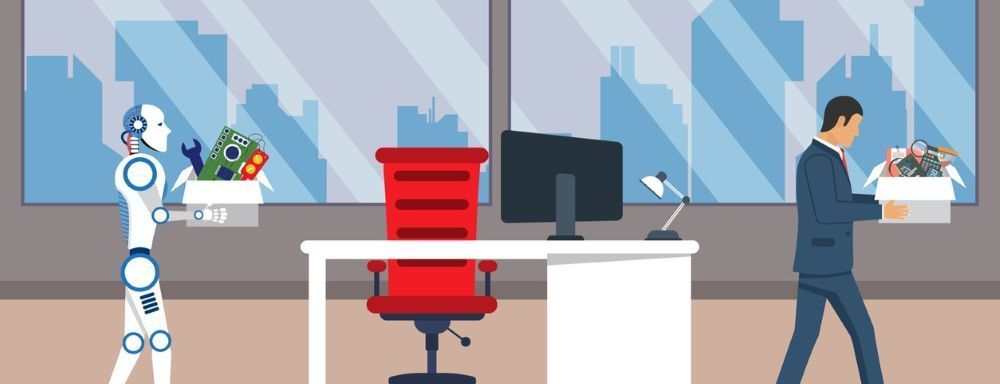
Many leadership teams look at AI simply as a tool to speed up administrative work. In practice, the rapid adoption of agentic AI is fundamentally restructuring how departments operate.
Changing Team Structures: Organizations are reducing internal team sizes or pulling back on hiring standard HR Business Partner (HRBP) and administrative roles. They assume automated workflows can entirely replace these positions.
The Missing Middle: Eliminating foundational and intermediate HR roles creates a dangerous talent gap. It disrupts future leadership pipelines and removes the people who understand how standard workflows actually operate on the ground.
The Standalone Paradox: When you shrink internal capacity too much, your business loses the strategic oversight needed to manage the technology itself.
The Value of Judgment: At AugmentHR, our model focuses on managing ad hoc workflows, so your leaders can focus on high-level strategy. Software lacks institutional memory, empathy, and contextual judgment. Replacing human workflows entirely with automated agents leaves your organization vulnerable.
Understanding the AI Spectrum: Automation vs. Agents
To effectively manage risk, leadership must recognize exactly what type of technology is entering their business environment. Different applications carry vastly different workforce implications.
Automation: Simple rules following fixed instructions to handle highly predictable, repeatable tasks, like scheduling a report or sending a payroll reminder.
Artificial Intelligence (AI): Systems that look at data, recognize patterns, and assist with research, drafting, or summarizing content.
AI Agents: Digital coworkers designed to execute safe, scoped actions across multiple software tools on your behalf, using built-in human checkpoints.
The Human Boundary: Risk spikes when companies deploy AI agents without clear human-in-the-loop boundaries. An agent can instantly update an HRIS or draft an employment contract. It cannot navigate complex employee relations, accurately assess cultural fit, or handle delicate human dynamics.
Mapping Your Human Capital AI Exposure
AI is already making its way into your organization through employees, line managers, and third-party vendors. This often happens long before leadership establishes clear policies or visibility. To protect your operations, you must actively map where technology intersects with your people.
What You Control: Your direct choices regarding HR team tools, internal data rules, manager guidance, and written employee policies.
What You Influence: Enterprise-wide AI governance, corporate workforce planning, productivity targets, and broader operational model changes.
What You Inherit: AI capabilities that tech vendors quietly embed into software you already use daily, including your ATS, enterprise suites, and payroll platforms.
What You Must Challenge: Any scenario where automated tools influence performance decisions, manage confidential employee relations data, or introduce bias without strict human oversight.
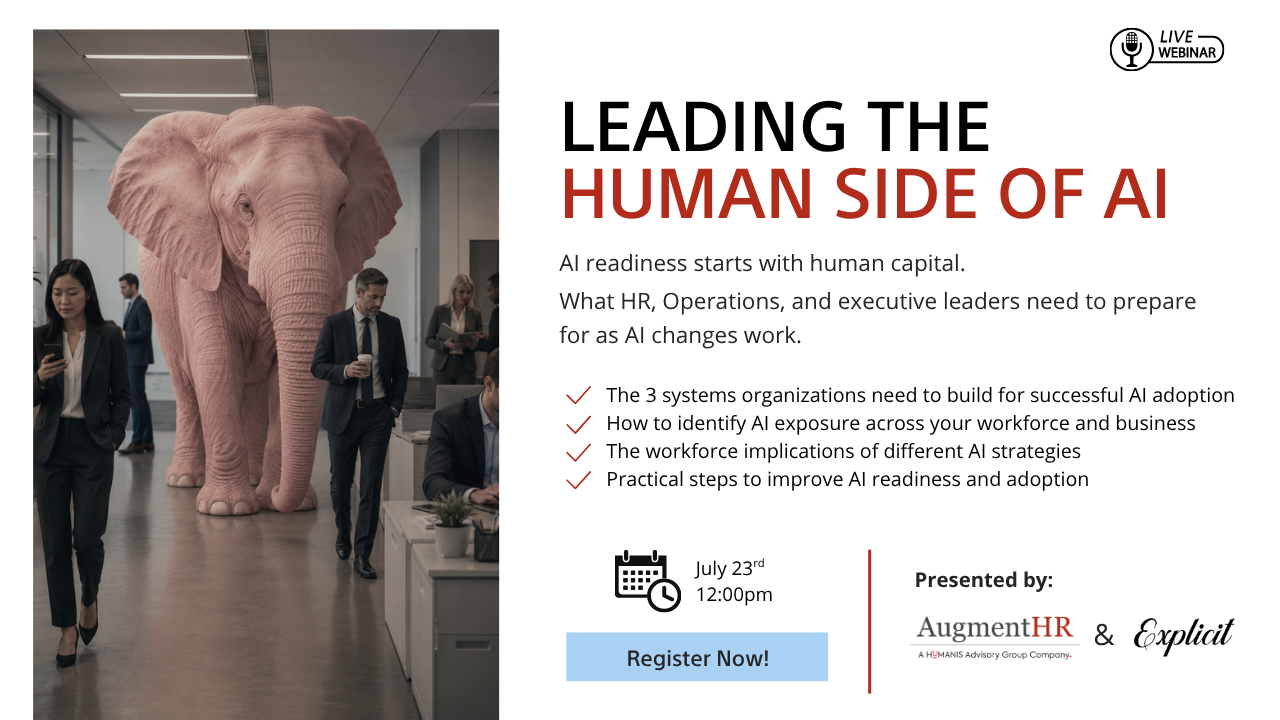
Join Our Upcoming Live Webinar
Building workforce readiness requires alignment across operations, technology, and leadership. To help you navigate these shifts, AugmentHR is hosting a live interactive session.
This webinar will explore the practical frameworks leaders need to manage risk and protect trust.
Webinar Title: Leading the Human Side of AI
Date & Time: July 23rd at 12:00 PM
Key Focus Areas: The three foundational systems organizations need to build, how to map AI exposure, and practical steps for workforce readiness.
We will share actionable insights on how to align your business strategy with employee trust. Register here.